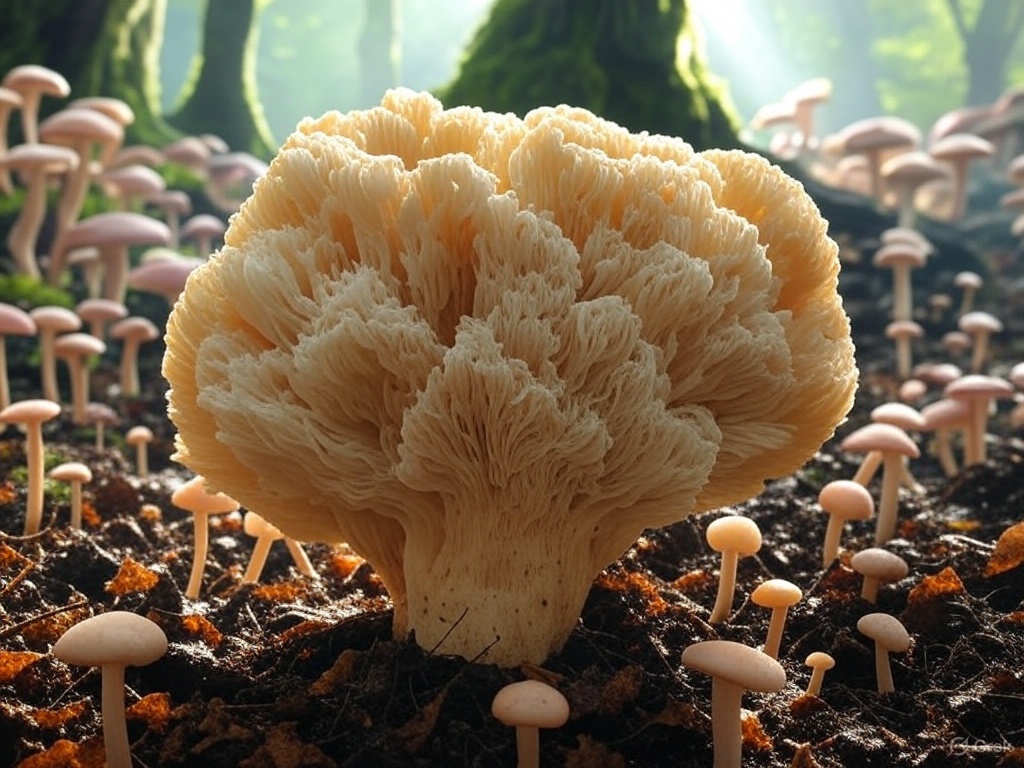
Lion’s mane mushroom (Hericium erinaceus), a distinctive white, shaggy fungus resembling a lion’s mane, has been used for centuries in traditional Chinese medicine and East Asian culinary practices. Known as “yamabushitake” in Japan, meaning “mountain priest mushroom,” it has long been revered for its potential to enhance focus and overall well-being, often used by Buddhist monks during meditation. In recent years, this edible mushroom has gained significant attention in the Western world for its purported cognitive benefits, particularly in supporting memory and mental clarity. But how much of this enthusiasm is backed by science, and what are the real benefits of lion’s mane for the mind? This article explores the current research, mechanisms, and potential of lion’s mane for memory and mental health, while critically examining the gaps in our understanding.
What Is Lion’s Mane Mushroom?
Lion’s mane is a functional mushroom native to North America, Europe, and Asia, typically found growing on hardwood trees like oak. It has a unique appearance with long, cascading spines and a mild, sweet flavor often compared to seafood like lobster or crab. Beyond its culinary appeal, lion’s mane is rich in bioactive compounds, including polysaccharides, hericenones, and erinacines, which are believed to contribute to its medicinal properties. These compounds have sparked interest in the scientific community for their potential to support brain health, particularly in the context of memory, focus, and mood.
The Science Behind Lion’s Mane and Brain Health
Lion’s mane has been dubbed the “smart mushroom” due to its potential to enhance cognitive function. The primary mechanisms through which it may benefit the brain involve the stimulation of nerve growth factor (NGF) and brain-derived neurotrophic factor (BDNF), both of which are critical for neuronal growth, survival, and plasticity.
- Stimulation of Nerve Growth Factor (NGF) and Brain-Derived Neurotrophic Factor (BDNF)
NGF and BDNF are proteins that play a vital role in the growth, maintenance, and repair of neurons. NGF, in particular, is essential for the survival of neurons in the peripheral and central nervous systems, while BDNF supports learning and memory by promoting synaptic plasticity. Studies have shown that lion’s mane contains hericenones (found in the fruiting body) and erinacines (found in the mycelium), which can cross the blood-brain barrier and stimulate the production of NGF and BDNF. For example, a 2011 study published in Biological and Pharmaceutical Bulletin demonstrated that hericenones from lion’s mane induced NGF expression in astrocytes, a type of brain cell. Similarly, erinacines have been shown to promote NGF synthesis in cultured brain cells, as noted in a 2023 study in the Journal of Neurochemistry. This study also found that a compound called N-de phenylethyl isohericerin (NDPIH), along with hericene A, promoted extensive axon outgrowth and neurite branching in hippocampal neurons, even in the absence of serum, suggesting potent neurotrophic activity.The hippocampus, a brain region critical for memory formation and emotional regulation, appears to be particularly responsive to these compounds. Research from the University of Queensland in 2023 found that lion’s mane extracts increased the size of growth cones in hippocampal neurons, which are essential for neurons to sense their environment and form new connections with other neurons. This could theoretically enhance memory formation and cognitive function by improving neural connectivity. - Neuroprotection and Reduction of Amyloid-Beta Plaques
Alzheimer’s disease, a leading cause of memory loss, is characterized by the accumulation of amyloid-beta plaques in the brain, which disrupt neuronal communication and lead to inflammation and cell death. Lion’s mane has shown promise in preclinical studies for its ability to reduce these plaques and protect against neuronal damage. A 2011 study in Biomedical Research found that lion’s mane extract reduced symptoms of memory loss in mice with amyloid-beta-induced cognitive impairment. The mushroom’s antioxidant properties may also help mitigate oxidative stress, a key contributor to neurodegenerative diseases. A 2021 study in Frontiers in Aging Neuroscience further supported this, showing that erinacine A-enriched lion’s mane mycelia improved cognitive test scores in individuals with mild Alzheimer’s disease over 49 weeks, compared to a placebo. - Enhancement of Cognitive Function in Healthy Individuals
While much of the research on lion’s mane has focused on neurodegenerative conditions, emerging studies suggest it may also benefit healthy individuals. A 2023 double-blind, placebo-controlled study published in PMC investigated the acute and chronic effects of 1.8 grams of lion’s mane supplementation in 41 healthy young adults aged 18–45. The results showed that a single dose improved performance speed on the Stroop task—a measure of cognitive processing and attention—60 minutes post-dose. Additionally, after 28 days of supplementation, participants reported a trend toward reduced subjective stress, hinting at potential mood benefits. However, the study found no significant improvements in other cognitive domains like episodic memory or working memory, and the small sample size limits the generalizability of these findings.Another small study from 2009, published in Phytotherapy Research, involved 30 older adults with mild cognitive impairment who took 3 grams of lion’s mane daily for 16 weeks. The lion’s mane group showed significant improvements in cognitive test scores compared to the placebo group, but these gains dissipated four weeks after supplementation ended, suggesting that the effects may not be long-lasting without continued use. - Mood Regulation and Stress Reduction
Lion’s mane may also support emotional serenity by reducing symptoms of anxiety and depression, which can indirectly enhance cognitive clarity. Animal studies have shown that lion’s mane extract can regenerate brain cells in the hippocampus and improve its functioning, which is often impaired in mood disorders. A 2010 study in Biomedical Research found that menopausal women who consumed lion’s mane cookies daily for one month reported reduced feelings of irritation and anxiety. More recently, the 2023 study mentioned earlier noted a trend toward reduced subjective stress in young adults after 28 days of lion’s mane supplementation. These effects may be linked to the mushroom’s ability to stimulate NGF, which influences mood-regulating neurotransmitters like dopamine and serotonin.
Potential Benefits for Memory and Focus
The research suggests several specific benefits of lion’s mane for memory and mental clarity:
- Improved Memory Formation: By promoting NGF and BDNF, lion’s mane may enhance the brain’s ability to form and consolidate memories. The 2023 Journal of Neurochemistry study highlighted its role in increasing neuron length and branching in the hippocampus, which could improve spatial memory and learning.
- Enhanced Focus and Processing Speed: The acute effects observed in the 2023 study, such as faster performance on the Stroop task, suggest that lion’s mane may improve attention and cognitive processing speed, potentially aiding focus in healthy individuals.
- Neuroprotection Against Cognitive Decline: Lion’s mane’s ability to reduce amyloid-beta plaques and protect against neuronal damage makes it a candidate for preventing or slowing the progression of Alzheimer’s disease and other forms of dementia. While human studies are limited, the 2020 study in Frontiers in Aging Neuroscience showed promising results in individuals with mild Alzheimer’s.
- Stress Reduction and Emotional Clarity: By alleviating stress and anxiety, lion’s mane may create a mental environment more conducive to focus and clarity. The 2010 study on menopausal women and the 2023 study on young adults both point to its potential mood-enhancing effects.

Critical Examination of the Research
While the preliminary findings are encouraging, there are significant limitations to the current body of research on lion’s mane:
- Limited Human Studies: Most studies have been conducted on animals or in vitro, with only a handful of small-scale human trials. For example, the 2009 study on older adults with mild cognitive impairment involved just 30 participants, and the 2023 study on young adults had only 41 participants. Larger, long-term studies are needed to confirm these effects in diverse populations.
- Short-Term Effects: Several studies, including the 2009 trial, noted that cognitive improvements diminished after supplementation stopped, raising questions about the sustainability of lion’s mane’s benefits. This suggests that continuous use may be necessary to maintain effects, which could pose challenges for long-term adherence.
- Inconsistent Results: Not all studies show clear benefits. A 2022 study cited in Medical News Today found no positive effect on cognitive function in students after four weeks of lion’s mane supplementation. Similarly, the 2023 study found no significant improvements in episodic or working memory, despite gains in processing speed.
- Mechanistic Uncertainty: While lion’s mane is known to stimulate NGF and BDNF, the exact pathways through which it affects cognition and mood are not fully understood. The 2023 Journal of Neurochemistry study suggested that NDPIH activates ERK1/2 signaling independently of certain BDNF pathways, indicating that its mechanisms may be more complex than previously thought.
- Dosage and Form Variability: Studies have used varying doses (1–3 grams daily) and forms (fruiting body, mycelium, or extracts), making it difficult to standardize recommendations. The potency of lion’s mane supplements can also vary depending on the manufacturer, as the FDA does not regulate dietary supplements as strictly as medications.
Practical Applications and How to Use Lion’s Mane
Lion’s mane is available in several forms, including fresh mushrooms, powders, capsules, tinctures, and teas. Here are some ways to incorporate it into your routine:
- Culinary Use: Fresh or dried lion’s mane can be cooked and added to dishes. Its seafood-like flavor makes it a versatile ingredient in soups, stir-fries, or sautés. Cooking until the outer layer is crispy can reduce any bitterness.
- Supplements: Capsules, powders, and tinctures are convenient options for consistent dosing. Studies have tested doses ranging from 1 to 3 grams daily, often divided into multiple servings. For example, the 2009 study used 3 grams daily (1 gram three times a day), while the 2023 study used 1.8 grams daily.
- Teas and Coffees: Lion’s mane powders can be mixed into hot water, tea, or coffee for a brain-boosting beverage. Some products combine lion’s mane with other adaptogens for enhanced effects.
When choosing a supplement, opt for products from reputable manufacturers that provide third-party testing to ensure quality and potency. Look for extracts standardized to contain a specific percentage of beta-glucans, which are among the bioactive compounds in lion’s mane.
Safety and Side Effects
Lion’s mane is generally considered safe for most people, with few reported side effects. Some individuals may experience mild gastrointestinal discomfort, such as nausea or stomach upset, as noted in clinical trials. There have also been rare reports of allergic reactions, including skin rashes or difficulty breathing, particularly in those with mushroom allergies. A 2003 case report in Biological and Pharmaceutical Bulletin documented a severe acute respiratory reaction possibly linked to lion’s mane consumption, though such cases are uncommon.
Lion’s mane may interact with certain medications, such as anticoagulants (due to its potential to slow blood clotting) or diabetes medications (as it may lower blood sugar). It may also stimulate the immune system, which could exacerbate symptoms in individuals with autoimmune conditions like lupus or multiple sclerosis. Pregnant or breastfeeding individuals should avoid lion’s mane due to a lack of safety data. Always consult a healthcare provider before starting supplementation, especially if you have underlying health conditions or are taking medications.
The Future of Lion’s Mane Research
The potential of lion’s mane for memory and mental clarity is promising, but the field is still in its infancy. Future research should focus on:
- Large-Scale Human Trials: Larger, placebo-controlled studies are needed to validate the cognitive and mood benefits of lion’s mane in both healthy and cognitively impaired populations.
- Long-Term Effects: Studies should investigate whether the benefits of lion’s mane persist over extended periods and whether continuous use is necessary to maintain effects.
- Mechanistic Insights: More research is needed to fully elucidate how lion’s mane influences brain function, particularly its interactions with NGF, BDNF, and other signaling pathways.
- Standardized Dosing: Establishing optimal doses and forms of lion’s mane will help ensure consistent results across studies and products.
Conclusion
Lion’s mane mushroom offers intriguing potential for supporting memory and mental clarity, backed by a growing body of preclinical and small-scale human studies. Its ability to stimulate NGF and BDNF, reduce amyloid-beta plaques, and enhance hippocampal function makes it a candidate for both neuroprotection and cognitive enhancement. For healthy individuals, it may improve focus and processing speed, while also reducing stress, creating a state of emotional serenity conducive to mental clarity. However, the research is far from conclusive, with significant gaps in our understanding of its long-term effects, optimal dosing, and mechanisms of action.
For those interested in trying lion’s mane, it can be a safe and potentially beneficial addition to a wellness routine, provided it’s used responsibly and under medical guidance if you have certain health issues. Whether you’re looking to boost memory, enhance focus, or support overall brain health, lion’s mane offers a natural, time-honored option that continues to captivate researchers and health enthusiasts alike. As science catches up with tradition, we may yet uncover the full extent of this remarkable mushroom’s benefits for the mind. It also tastes great grilled on a BBQ like a steak and lions mane powder is smoothies and coffee is great. Make sure you have a good source for tinctures and take an effective dose. For some it can be a great addition to your regular supplement regime.
Check out our article and user guide on microdosing for more information on the effects of combining Lions mane and Psilocybin and the potential benefits towards improved focus and memory.
For more information on medicinal mushrooms, retreats and psychedelic therapy, sourcing quality products and supplements in Canada, news and updates visit us at doctorphillocybin.co or subscribe to our blog and monthly newsletter!

 Doctor Phillocybin